The Weirdest Tax Protests in the Last Century
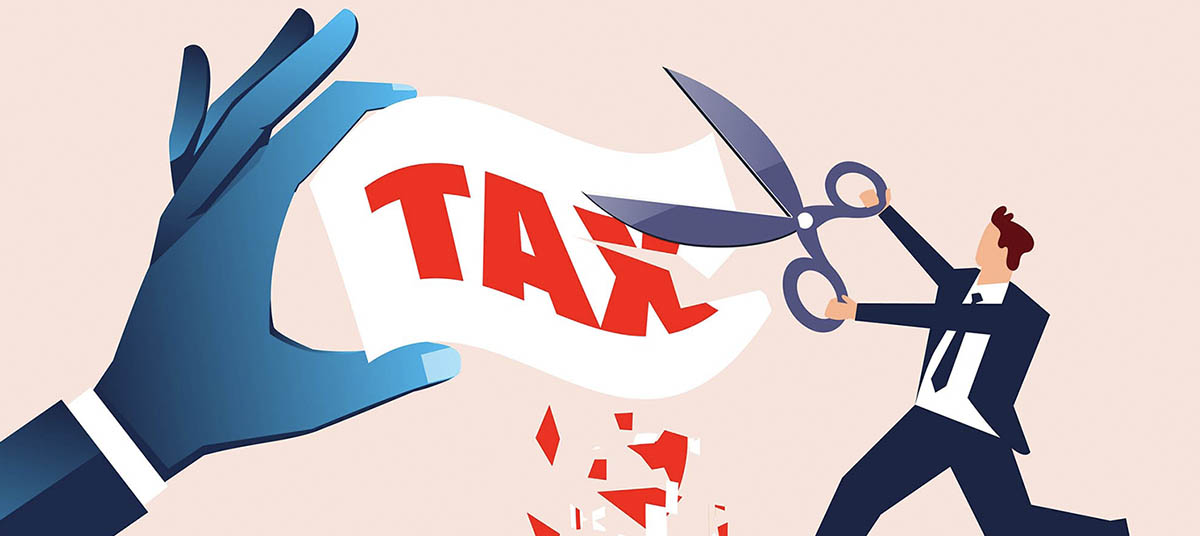
Taxes are usually dull. But every so often they spark something strange, from performance-art protests to digital revolts to tractor blockades. Here are five tax uprisings that broke the mold over the last 100 years.
1. The Break-dancer in Cranford, New Jersey – 2025
At a crowded town hall meeting in Cranford, New Jersey, at first glance, it seemed like a typical municipal gathering: residents watched the slide show, listened to the budget line items, the property-tax increases. Then, a man in casual business-casual clothes dropped into a series of break-dance moves. He spun, he moon-walked. Why? According to the local ABC affiliate, his property taxes had jumped far more than he expected; the referendum promised a moderate $400 bump, yet his bill surged nearly $900.
This was his protest. He peppered the township committee with questions, stood on the table, and danced. The crowd gasped. Some laughed. Some were annoyed. He wasn’t destroying equipment or chaining himself to the mayor’s desk. He was doing a backspin. He made the spectacle the message: “You raised my taxes, now watch me dance in your meeting.”
The performance did two things: it drew media attention, and it reframed the typical “tax protest” as something almost absurd. He stood for frustration—over growth, over development, over local deals, and a sense of powerlessness—turned into kinetic art. The Cranford break-dancer reminded everyone that tax policy affects real people, and sometimes they revolt in a way you don’t expect.
Key Lesson: When people feel like they have no control over tax increases, their protests can become performative. Property taxes may be local and boring, but that doesn’t stop the thread of anger from showing up, sometimes on one foot, pivoting.
2. The Social-Media “Gossip Tax” in Uganda – 2018
In July 2018, the government in Kampala, Uganda passed a daily tax of 200 shillings (about US $0.05) on users who accessed popular apps like Facebook, WhatsApp, Twitter and other over-the-top (OTT) platforms.
Why is that weird? Because for the vast majority of global tax revolts we expect property, income, consumption, not a daily fee to chat with friends. This tax targeted digital speech, expression, and connection: the tools of dissent. President Yoweri Museveni described it as a “gossip tax,” meant to tamp down frivolous online chatter. Opponents saw it as a direct assault on free speech and youth mobilization.
Protests followed. Roughly 200 people marched in Kampala, many led by pop-star turned politician Bobi Wine (Robert Kyagulanyi). Police fired tear gas. In an academic study, researchers found that while Twitter use fell about 13 % after the tax took effect, mentions of collective action rose 31 %, and observed protests increased by about 47 %. In a strange twist, a tax meant to quiet dissent may have galvanized it.
In everyday terms: imagine paying a nickel every day just to send WhatsApp messages—and being told it’s for the public good. Then you walk to the square, chanting and waving phones. That’s what happened. This incident shows how tax policy can morph into dominance over speech and connectivity, how youth culture becomes a tax target, and how protest evolves into digital resistance.
Take-away: Taxation is not just about money. It’s about access, about power, about conversation. When a tax hits the very conduit of interaction, the protest takes on a different face.
3. The “Bonnets Rouges” (Red Caps) Revolt in Brittany, France – 2013
In late 2013, in the rugged, windswept region of Brittany in north-western France, farmers, transport workers, business owners and locals banded together under the banner of the “Bonnets Rouges” (Red Caps). Their target: a new ecological tax on heavy trucks, dubbed the “écotaxe,” which would erect gantries across motorways to register heavy vehicle use and impose fees.
Imagine, for a moment, tractors rolling onto highways, protesters wearing red caps in homage to a 17th-century French Revolution revolt, metal toll-gantries being set ablaze, blockades everywhere. One report noted that more than 200 of the tax-collection gantries or radar structures were destroyed in just a few months.
The economic backdrop here is important. Brittany’s agribusiness was struggling; the new tax would hit the regional freight system and add cost burdens on rural producers. The anger was layered thanks to tax policy, regional identity, and economic strain. By early 2014, the French government suspended the tax. The cost was enormous: nearly €1 billion in compensation and lost revenue.
This situation stands out because it wasn’t just a protest—this was a semi-organized rural revolt against an environmental tax, with red hats as their uniform, tractors as weapons, and tax-gantries as targets. It’s part industrial action, part regional rebellion, part tax revolt.
Lesson: Taxes often trigger protests when combined with identity and fairness issues. When the people feel the burden is external and unfair—and the symbol of the tax is physical (gantry, toll booth)—the backlash can verge on theatrical.
4. The Egba Women’s Tax Revolt – Abeokuta, Nigeria – Late 1940s
Though it had been brewing for decades, in the late 1940s in Abeokuta (then under British colonial rule in Nigeria), thousands of women—market traders, farmers, wives—stood up and said: we refuse to pay this tax. The tax was a flat-rate levy on women, implemented by colonial authorities, but without adequate representation, and in the context of economic decline. The revolt is sometimes called the Egba Women’s Tax Riot.
These women were taxed even though their incomes were unstable; they lacked voting rights; and the colonial government was extracting resources while offering little voice. They organized, petitioned, marched. The revolt had cultural, gender and economic dimensions. A tax uprising led by women in a colonial setting, about representation and gender as much as money. The protest space isn’t suburban town hall or social media—it’s market stalls, trading women, an entirely different landscape.
Think of long lines at market stalls in Abeokuta, women covering their heads, bundles of produce aside them, whispering about taxes creeping up. Then the decision: if they won’t pay, everyone stops trading. Every market day becomes a protest. Tax resentment isn’t only about how much you owe, but who’s asking it of you, under what conditions, and whether you have any say.
Take-away: Taxes that hit marginalized groups—especially when paired with voicelessness—often provoke unusual responses rooted in dignity, not mere dollars.
Bonus: The Whiskey Rebellion – Pennsylvania, USA – 1791-94
Going further back than a century may seem odd, but the flash and fury of the Whiskey Rebellion deserves inclusion for context. Other than revolutions (French, American) that led to full-scale wars, this was the grandfather of tax rebellions, in many ways. In the early United States, small-scale farmers in western Pennsylvania distilled their surplus grain into whiskey, both to preserve value and to transport it more easily. When the federal government imposed an excise tax on distilled spirits (1789–91), the frontier farmers exploded.
Their weapons were actions: tarring and feathering tax collectors, forming militias, and threatening insurrection. The federal government responded with military force (13,000 soldiers under President George Washington) to settle the matter. Here is the archetype of weird tax revolt—spirits, frontier bleachers, heavy militia, and the tax as a flashpoint for federal authority.
Picture the rough‐cut terrain, moonshine stills in hidden hollows, whiskey barrels rolling downhill. Then the mounted tax man arrives: “Your distillery is owing.” The farmer snorts.“ Here’s my barrel.” Tensions escalated from there to muskets and militia. Tax protests can be explosive when the tax touches identity, livelihood, culture (here whiskey), and when the state is seen as remote and illegitimate by those taxed.
Lesson: The weirdness is the scale + the symbol. Whiskey isn’t just liquor—it’s an economic tool in this frontier world. And, the protest isn’t polite. It’s about survival.
Why This Matters
These five cases illustrate something fundamental: taxes aren’t just line items on a bill—they’re entwined with identity, fairness, representation, and power. When the taxed feel invisible, powerless, or unfairly targeted, weirdness arises. Performance, destruction, digital revolt, gender-based protest—all of it becomes protest.
In each case:
The object of taxation felt unfair (social media tax, eco-tax, flat women’s tax, whiskey excise).
The method of protest was unusual—dance, tractors, digital mobilization, women markets, militia.
The symbolism mattered: red caps, break-dance, phones, stills.
The outcomes varied: suspension of tax, crackdown, compensation, policy change.
When your modern clients feel the burden—and especially when the tax is new, visible or symbolic—they may seek unconventional forms of pushback. The form the protest takes may matter as much as the substance.
In a world full of spreadsheets, audits, and compliance checklists, it’s tempting to treat tax as purely mechanical. But the stories above remind us that taxes live in the realm of the human-and-weird. The break-dancer in Cranford, the WhatsApp tax in Kampala, the red-cap farmers in Brittany—they all say: if you tax us, we will find a way to show it. And sometimes that way looks nothing like what you expect.
Want tax & accounting tips and insights?
Sign up for our newsletter.